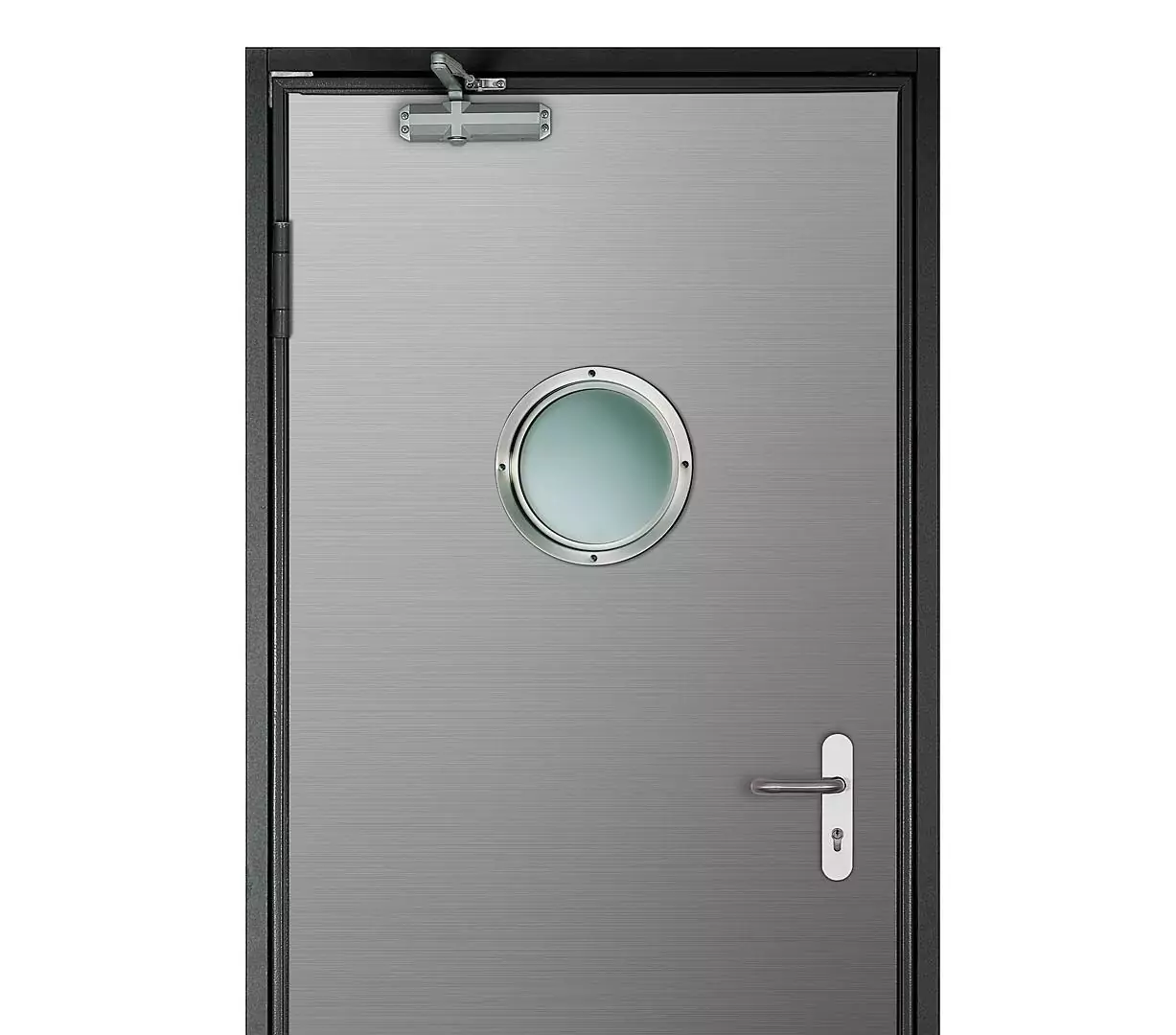
Choosing between different fire door manufacturers should not depend solely on price or lead times. These solutions are part of passive fire protection and limit the spread of fire and smoke. Therefore, architects, engineering firms, developers, and installers need a supplier capable of certifying performance, providing guidance throughout the project, and ensuring that each door meets the specific conditions of its actual use.
Certification and regulatory compliance as the primary criterion
A reliable manufacturer must provide clear and up-to-date technical documentation. It is advisable to verify the fire resistance classification—such as EI₂ 60, EI₂ 90, or EI₂ 120—the CE marking (where applicable), and the corresponding Declaration of Performance.
Testing and classification must comply with the relevant European standards and the requirements of the Technical Building Code. Performance depends on the tested assembly: leaf, frame, hinges, lock, door closer, seals, accessories, and installation system.
It is also necessary to verify that the dimensions, opening direction, finishes, and any additional elements are covered by the scope of the certification. Requesting these documents prior to purchase reduces risks during project handover, inspections, and maintenance.
Technical capability and adaptation to each project
The best fire door manufacturers act as technical partners. They analyze the building’s usage, traffic levels, opening dimensions, evacuation requirements, and fire compartmentation needs. Based on this information, they can recommend a single- or double-leaf door—whether hinged or sliding—along with compatible hardware and accessories.
Industrial expertise is reflected in product consistency, quality control, and the ability to meet special requirements within the certified scope. Factors such as mechanical durability, corrosion resistance, traceability, and finishes are particularly important for hospitals, hotels, logistics centers, parking facilities, and industrial buildings. Furthermore, a supplier with in-house manufacturing capabilities offers the responsiveness needed for complex projects.
Service, installation, and support throughout the service life
A certified door retains its functionality only if it is correctly installed, used, and maintained. Before selecting a supplier, it is advisable to evaluate technical data sheets, installation and maintenance instructions, product identification, and the support offered to specifiers and installers. Factors such as lead times, logistics, spare parts availability, and hardware compatibility should also be reviewed. Support does not end at delivery; fire doors require periodic inspections of the closing mechanism, seals, hinges, panic bars, and hold-open devices. Working with a manufacturer that provides maintenance guidelines helps extend the door’s service life and prevents modifications that could compromise its certified performance.
Comparing fire-rated door manufacturers involves evaluating certifications, manufacturing capacity, and technical support as an integrated package. Asturmadi Doors designs and manufactures metal fire-rated doors for domestic and international projects, offering certified solutions with various fire-resistance ratings. Their expertise enables them to support the client throughout the entire process, from specification to delivery. Consulting their specialized team is the first step toward defining a safe, well-documented solution tailored to the specific requirements of each project.