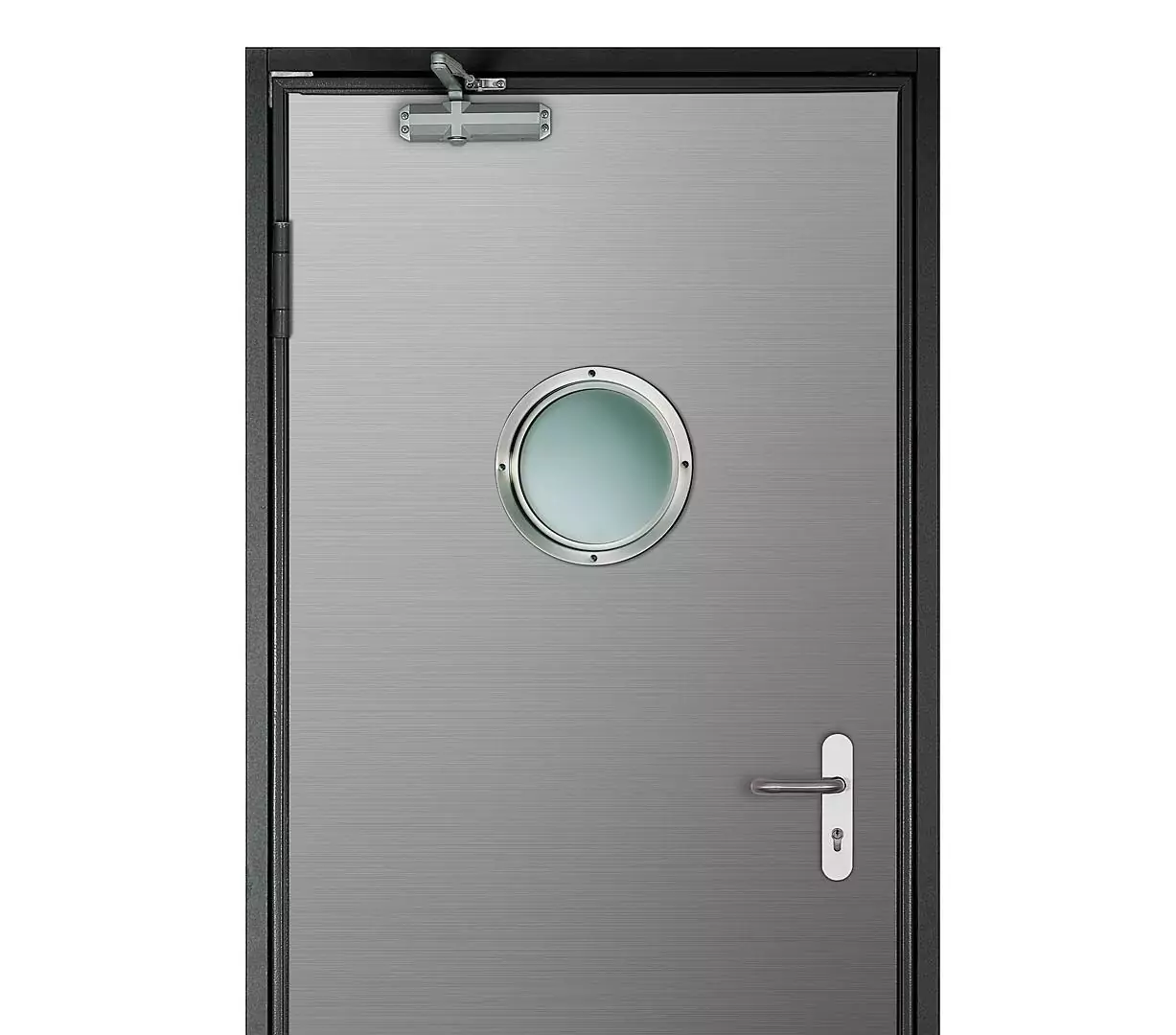
Fire safety has become a top priority in the design and construction of modern buildings, with steel fire doors being one of the most critical elements of this protection strategy. These specialized doors serve as a vital barrier that can make the difference between effectively containing a fire and allowing it to spread uncontrollably.
The unique properties and characteristics of steel fire doors make them an indispensable solution for commercial and industrial spaces. Their ability to withstand high temperatures, combined with their exceptional durability and safety-focused design, makes them an essential investment in fire protection.
In this article, we will explore in detail the advantages, properties, and applications of steel fire doors, as well as key aspects of their installation, certifications, and maintenance. We will examine why these doors have become a safety standard in modern construction and how their proper installation can save lives and protect valuable assets.
Advantages of Steel Fire Doors
Steel fire doors are one of the most effective solutions for fire safety, standing out for their unique ability to contain the spread of fire and protect lives. Their robust construction and high-quality materials make them a virtually impenetrable barrier during emergencies, providing the crucial time needed for the safe evacuation of occupants.
Among their main advantages is their extraordinary heat resistance; they can withstand extreme temperatures for extended periods without losing their structural integrity. In addition, these doors are designed to be completely airtight, which prevents toxic smoke from spreading between different sections of the building—a critical factor, given that smoke inhalation is the leading cause of fire-related fatalities.
Durability is another key feature of steel fire doors. Their construction from high-quality galvanized steel makes them resistant not only to fire, but also to corrosion and heavy daily use. This feature makes them a cost-effective long-term investment, as they require minimal maintenance and have an exceptionally long service life.
• Superior resistance to fire and high temperatures
• airtight seal against toxic fumes
• exceptional durability and low maintenance
• compliance with safety regulations
• adaptability to different types of buildings
Properties and Strength of Steel Fire Doors
The properties and strength of steel fire doors are based on a multilayer construction that combines various high-tech materials. The outer layer is made of high-quality galvanized steel, with a thickness ranging from 1.2 to 2.0 mm, providing exceptional structural strength. The inner core consists of special insulating materials, such as high-density mineral wool, which acts as an effective thermal barrier.
In terms of fire resistance, these doors are designed to maintain their structural integrity for specific periods of time, typically classified as 60, 90, or 120 minutes (RF-60, RF-90, RF-120). This rating indicates the length of time the door can effectively contain fire and heat, maintaining safe temperatures on the side not exposed to the fire. The side not exposed to the fire remains below 140°C on average, even when the exposed side reaches temperatures exceeding 1,000°C.
The mechanical properties of steel fire doors include remarkable resistance to impact and deformation. The frames are reinforced with special anchors that ensure stability during an emergency, while intumescent gaskets expand when heated to completely seal any gaps, ensuring that neither fire nor smoke can penetrate through the edges. These technical features are complemented by hardware specifically designed to withstand high temperatures, including hardened steel hinges and panic locks that remain fully functional even under extreme conditions.
Applications and Comparison with Other Options
Steel fire doors are used in a wide range of sectors, from commercial buildings to high-demand industrial facilities. In hospitals, these doors are essential for creating fire-rated compartments that protect patients with limited mobility, while in hotels and shopping centers, they serve as an integral part of evacuation routes, ensuring the safety of large numbers of people.
Compared to alternatives such as wooden or aluminum fire doors, steel doors offer significant advantages. While wooden doors can provide up to 90 minutes of fire resistance, steel doors easily reach 120 minutes or more. Aluminum doors, although lighter, cannot match the durability and structural strength of steel, especially in conditions of extreme heat, where aluminum tends to warp more quickly.
The versatility of steel fire doors is reflected in their many configurations: they can be single or double, with or without a viewing window, and can even incorporate automatic closing systems. This level of adaptability, combined with their superior fire resistance, makes them the preferred choice for:
• emergency staircases and evacuation exits
• machine rooms and technical areas
• hazardous materials storage facilities
• separation between fire compartments
• protection of critical areas in industrial buildings
Installation and Design of Steel Fire Doors
The installation and design of steel fire doors require meticulous planning and specialized technical expertise to ensure their optimal performance. The process begins with a thorough assessment of the space and the building’s specific needs, taking into account factors such as traffic flow, fire resistance requirements, and local building codes.
The design must take into account crucial elements such as the frame, which must be firmly anchored to the building’s structure using expansion bolts or welding, depending on the type of wall. The door panel is manufactured with millimeter precision to ensure a perfect seal, incorporating intumescent gaskets around the entire perimeter that expand when exposed to heat to create an airtight barrier against smoke and flames.
During installation, it is essential to maintain the correct tolerances between the sash and the frame—typically between 2 and 3 millimeters—to ensure both proper operation and an adequate seal. Specialized installers must verify critical aspects such as:
• leveling and plumb-lining the frame
• the correct placement of hinges and hardware
• the smooth operation of the locking mechanism
• the proper activation of panic systems
• the integrity of the intumescent seals
The final finish can be customized to meet the project’s aesthetic needs, offering options such as electrostatic painting in a variety of colors, while always maintaining the fire-resistant properties that characterize these safety components. Installation must be certified by authorized professionals to ensure compliance with all fire safety regulations.
Durability, Certifications, and Maintenance of Steel Fire Doors
The durability of steel fire doors is backed by rigorous international standards and certifications that guarantee their effectiveness in critical situations. These certifications, such as UL (Underwriters Laboratories) and EN 1634-1, verify that the doors meet the specific fire resistance and safety requirements established by current regulations.
Maintenance of steel fire doors must be performed regularly according to a specific schedule that includes periodic inspections of critical components. It is essential to verify the operation of hinges, locks, and automatic closing mechanisms, as well as to check the integrity of the intumescent gaskets and the overall condition of the surface. It is recommended that these inspections be conducted at least every six months, documenting any anomalies detected.
Items that require special attention during maintenance routines include:
• automatic locking systems and electromagnetic retention systems
• Condition of intumescent gaskets and seals
• Lubrication of hinges and moving parts
• Checking the closing pressure
• inspection for possible surface damage or deformations
Certifications for steel fire doors must be renewed according to the deadlines established by local regulations—generally every 5 years—through tests that verify that they maintain their original fire-resistance properties. A properly maintained door can remain effective for more than 20 years.