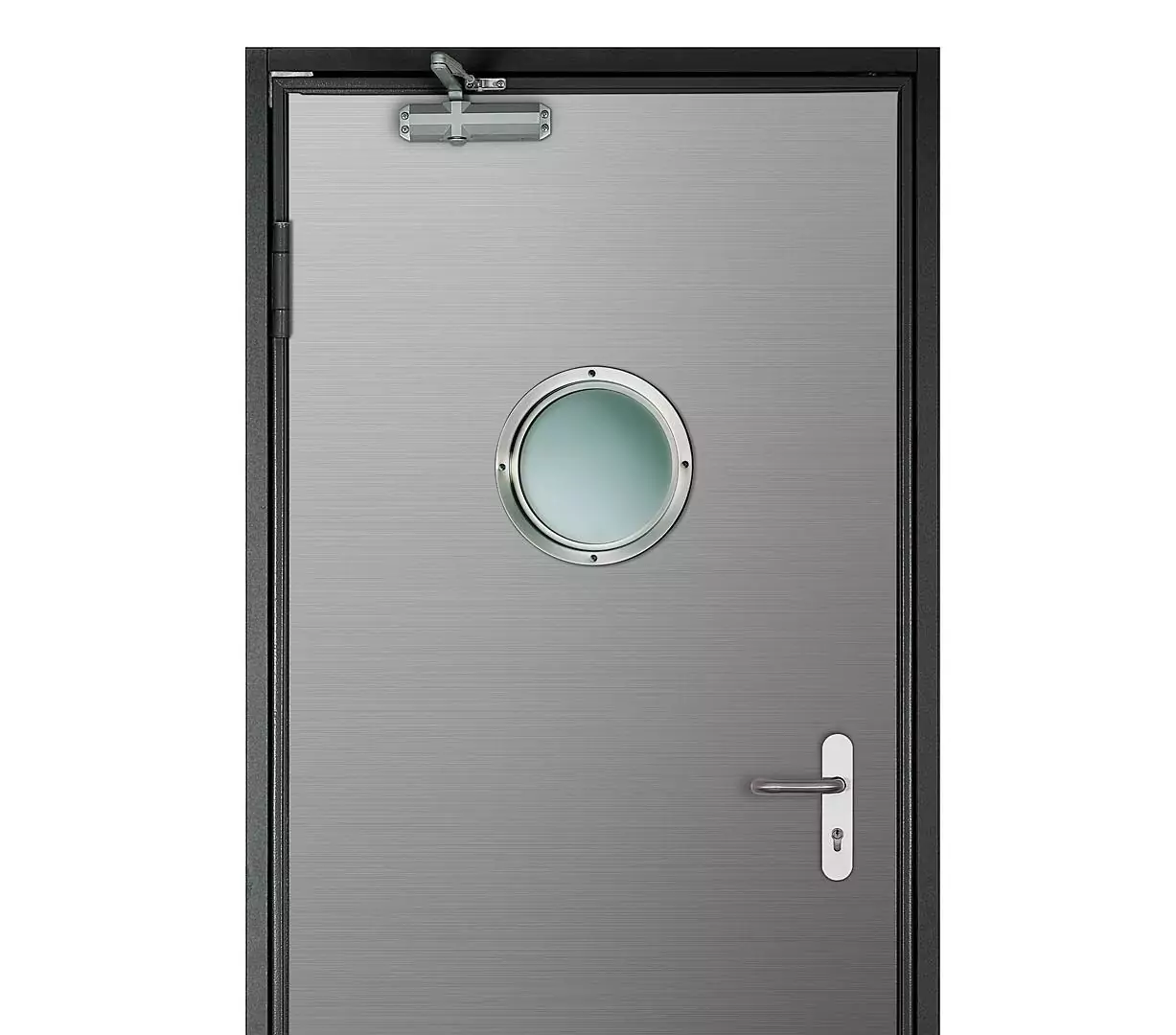
Proper maintenance of fire doors is crucial to ensuring their optimal performance in the event of a fire. These doors are designed to protect lives and property by containing the fire and preventing the spread of smoke. In this detailed guide, we will explore the most important practices for keeping these doors in top condition.
Why is fire door maintenance important?
Safety Guarantee
Fire doors play a vital role in fire safety. Proper maintenance ensures that they function correctly when they are needed most.
Regulatory Compliance
Current regulations, such as Spain’s Technical Building Code (CTE), require that fire doors be maintained in optimal condition to comply with safety regulations.
Extending the service life
Regular maintenance not only ensures their proper functioning but also extends the service life of fire doors, reducing replacement costs.
Key Components of a Fire Door to Maintain
1. Intumescent seals
These gaskets expand when heated to block the passage of smoke and flames. It is essential to check that they are not worn or damaged.
2. Hardware and Hinges
Hinges and locks must be well-lubricated and in good condition to ensure a tight seal.
3. Automatic-closing mechanisms
The automatic closing mechanism is crucial for the door to function properly. Any failure in this mechanism could compromise its effectiveness.
4. Door surface
Check that the surface has no cracks, dents, or other damage that could affect its fire resistance.
5. Fire-resistant sealants and materials
Check to make sure that the fire-retardant materials are in good condition and have not lost their effectiveness.
Recommended Maintenance Frequency
Monthly Inspections
Perform quick inspections to check for visible damage or malfunctions in the mechanisms.
Semiannual Maintenance
Every six months, it is important to conduct more detailed inspections, including testing the automatic locking and sealing systems.
Annual Inspections
Annual inspections must include a thorough review of all parts of the door, performed by a qualified technician.
Steps for Effective Maintenance
1. Initial visual inspection
- Inspect the door for visible damage.
- Check to make sure there are no obstructions preventing it from closing completely.
2. Functional Tests
- Open and close the door several times to make sure the mechanism is working properly.
- Check to make sure the automatic lock operates smoothly.
3. Replacement of worn components
- Replace intumescent gaskets that show signs of wear.
- Replace damaged hinges or locks to ensure optimal operation.
4. Cleaning of Surfaces and Mechanisms
- Clean the door with non-abrasive products to avoid damaging the finish.
- Lubricate the hinges and locking mechanisms to prevent them from jamming.
Common Mistakes in Fire Door Maintenance
1. Ignore minor damage
Don’t underestimate minor cracks or wear and tear, as they can compromise the door’s effectiveness in the event of a fire.
2. Failure to conduct regular inspections
A lack of regular inspections can lead to accumulated problems that are costly and difficult to resolve.
3. Use of uncertified materials
Using non-approved materials for repairs or maintenance may violate regulations and reduce the door’s effectiveness.
Benefits of Proper Maintenance
1. Guaranteed Security
Regular maintenance ensures that fire doors act as an effective barrier against fire and smoke.
2. Legal Compliance
Keeping doors in optimal condition helps avoid legal penalties and ensures compliance with safety regulations.
3. Cost Optimization
Regular maintenance reduces the need for frequent replacements, which translates into significant long-term savings.
Regulations Regarding the Maintenance of Fire Doors
In Spain, regulations require regular inspections and periodic maintenance of fire doors. This includes complying with the requirements set forth in the Technical Building Code (CTE) and other local and international regulations, such as EN 1634-1.
Professional Maintenance vs. In-House Maintenance
Benefits of Professional Maintenance
- Specialized technicians can detect problems that might otherwise go unnoticed.
- Guarantee that repairs comply with regulations.
In-house maintenance
Although in-house staff can perform basic inspections, it is recommended to have professionals conduct more complex inspections.
Conclusion
Effective maintenance of fire doors not only protects lives and property, but also ensures compliance with regulations and optimizes long-term costs. Adopting a routine of periodic inspections and maintenance is key to ensuring that these doors function properly in the event of an emergency