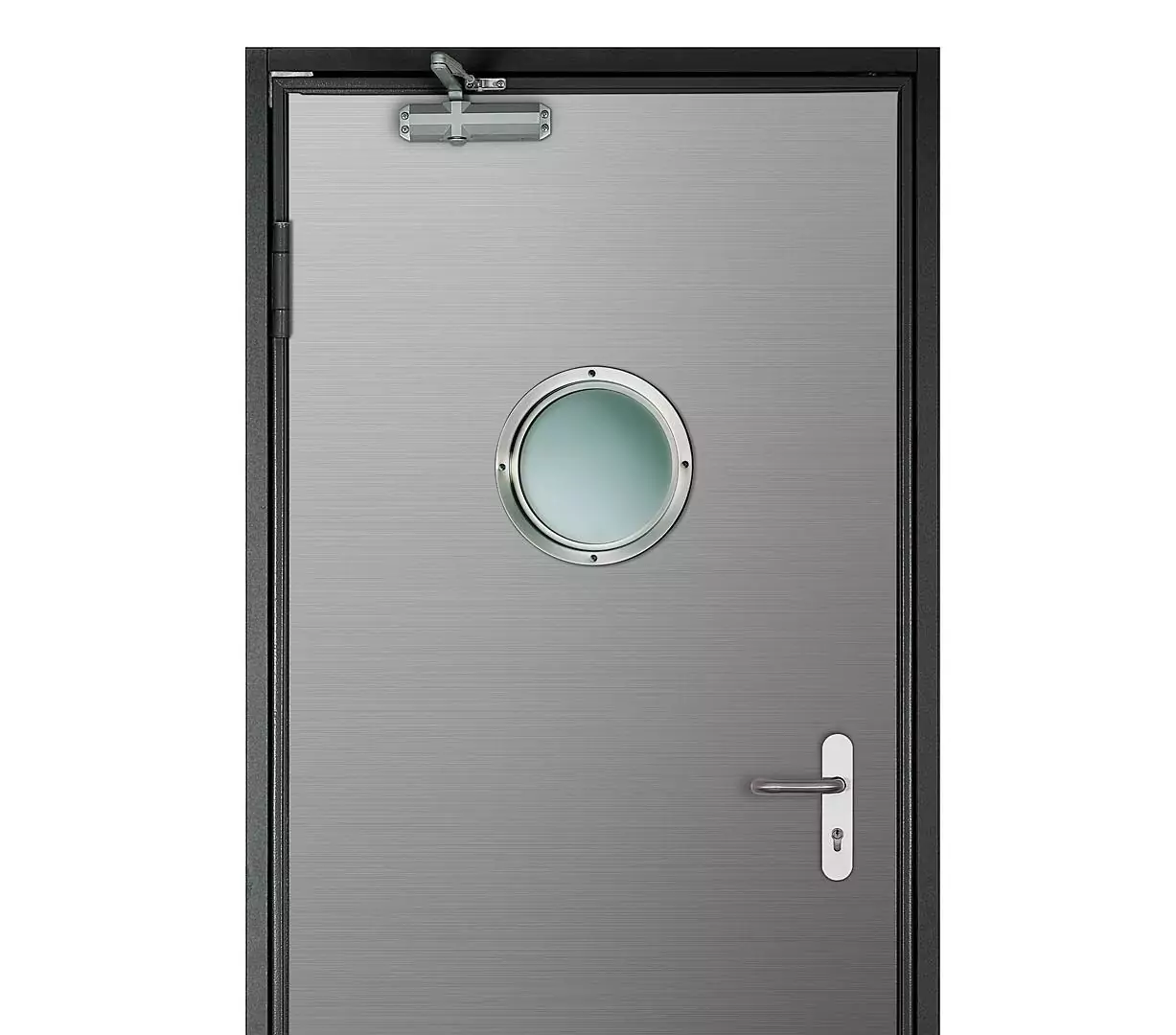
Use of Fire Doors | Mistakes to Avoid and Safety
Discover the most common mistakes made when using fire doors and how to avoid them to ensure safety and regulatory compliance.
Tips for Using Fire Doors: Mistakes to Avoid
The Importance of Proper Use of Fire Doors
Fire doors are designed to remain closed and act as a barrier against fire and smoke. Improper use can cause the so-called chimney effect, allowing smoke to spread rapidly through stairwells and common areas, increasing the risk to the building’s occupants.
User awareness is just as important as product quality or maintenance.
Mistake 1: Blocking the open fire door
One of the most common mistakes is to prop open a fire door using wedges, fire extinguishers, ashtrays, or other objects.
- Fire doors must remain closed to fulfill their purpose
- The door closer is a required component under the regulations
- A blockage prevents the automatic closure in the event of a fire
When can a fire door remain open?
In some areas, such as shopping malls or high-traffic hallways, fire doors can remain open using electromagnets connected to the detection system, which automatically release the door in the event of a fire.
Error 2: Preventing Evacuation with Inappropriate Locks
Fire doors located in evacuation routes must never:
- Bring padlocks
- Having chains on panic bars
- Requires a key to exit
The correct solution is to use panic locks, which allow for:
- Lockable from the outside
- Instant unlocking from the inside without a key
This ensures both safety and evacuation at the same time.
Error 3: Improper use of garage entrances and stairwells
Fire doors connecting garages to stairwells or elevators should not require a key to allow access to the building’s common areas.
This type of misuse can jeopardize evacuation in the event of a fire and constitutes a serious violation of safety regulations.
Mistake 4: Tampering with or modifying the fire door
Modifying a certified metal fire door without following the manufacturer’s instructions may invalidate its certification.
Some incorrect practices include:
- Remove the original hardware
- Replacing components with non-certified ones
- Installing non-approved accessories
Any modification must comply with the door’s tested configuration.
Maintenance: A User’s Responsibility
In addition to proper use, the maintenance of fire doors is the responsibility of the building’s user or owner.
This maintenance includes:
- Periodic Inspection of the Automatic Locking Mechanism
- Inspection of hardware and intumescent seals
- Check that the door is not jammed or damaged
Without maintenance, even a certified door can fail at the most critical moment.
User Training and Awareness
Proper training of building occupants significantly reduces errors in the use of fire doors.
Please provide information on:
- Why They Should Remain Closed
- What You Should Never Do
- What to Do in Case of a Fire
It is a simple measure that significantly improves safety.
Commitment to Safety
At Asturmadi Doors, we emphasize that fire safety depends on three key factors:
- Certified Fire Doors
- Proper Use by Users
- Proper Routine Maintenance
The combination of these elements is the only way to ensure real protection.
If you need advice on the proper use of fire doors or would like to review your building’s safety, contact our technical team and we’ll be happy to help you—with no obligation.