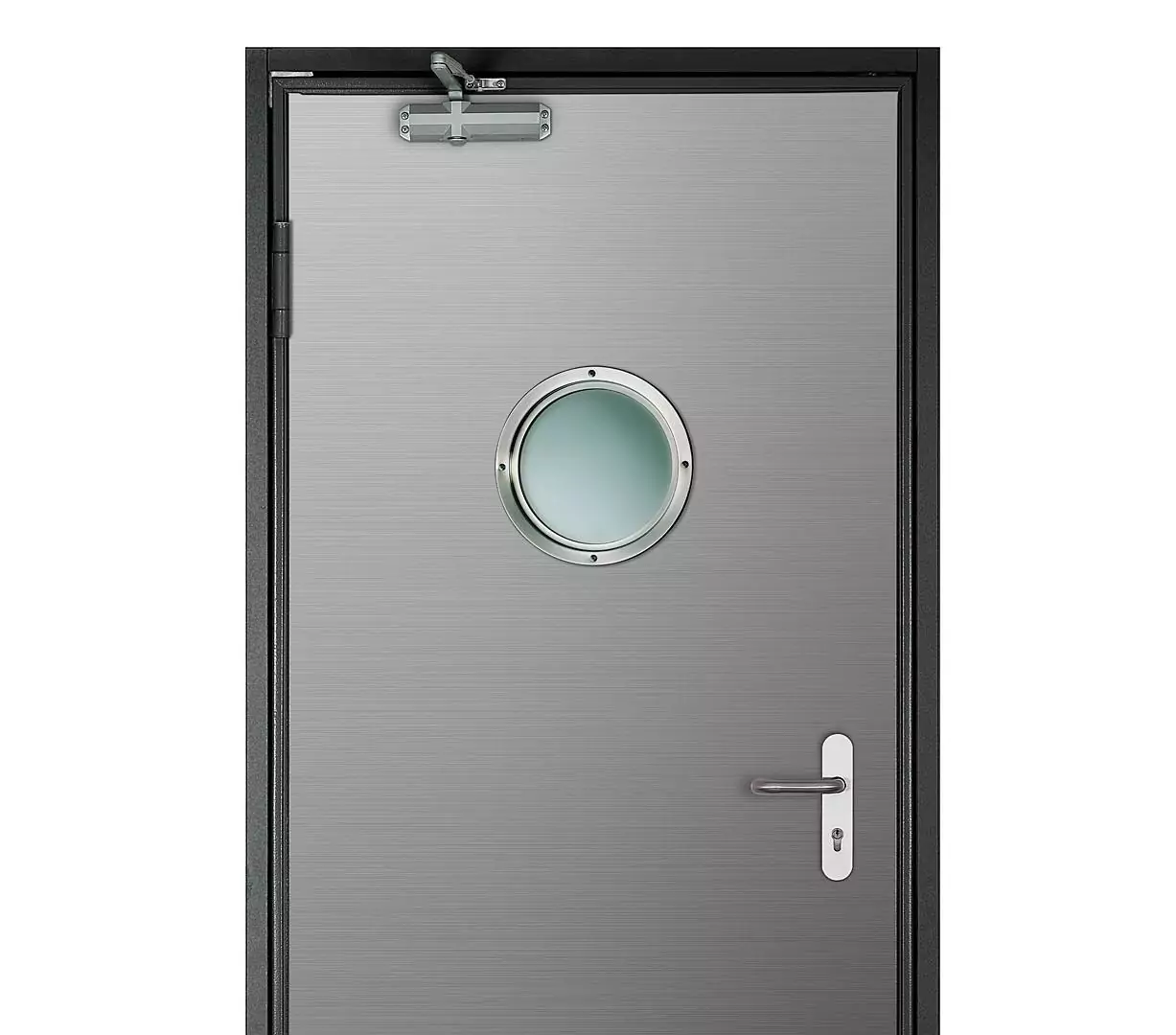
In the fire safety industry, the choice of material for manufacturing fire doors is critical. These doors must not only serve as effective barriers against fire but also offer durability, strength, and reliability. Although there are several options on the market, metal stands out as the most suitable and safest material for manufacturing fire doors. This article will explore why metal is superior to other materials such as wood or glass, especially when it comes to protecting lives and property in the event of a fire.
The Importance of Metal in Fire Safety
Metal, particularly steel, is a material that can withstand extreme temperatures and maintain its structural integrity for longer than other materials. In emergency situations, such as fires, this extra time is essential for enabling a safe evacuation and reducing the spread of fire. Additionally, metal is less susceptible to damage caused by the passage of time and environmental conditions, making it the preferred choice for high-occupancy buildings such as hospitals, shopping centers, and residential buildings.
Advantages of Using Metal in the Manufacture of Fire Doors
High resistance to fire and deformation
Unlike materials such as wood, metal—especially steel—does not easily deform or weaken when exposed to high temperatures. Metal doors maintain their structure and functionality under extreme conditions, ensuring that evacuation routes and safety zones remain effectively protected. This resistance is key to fire containment and the safety of a building’s occupants.
Greater durability and low maintenance
Metal is extremely durable and resistant to natural wear and tear. Compared to wood, which requires fire-retardant treatments and can deteriorate over time, metal doors require much less maintenance. This durability reduces maintenance costs and ensures that the door continues to function properly even after several years of use.
Protection against the spread of smoke and toxic gases
During a fire, one of the greatest risks is the spread of smoke and toxic gases. Metal doors are designed to seal tightly, blocking the transfer of smoke and gases between different areas of the building. This not only protects occupants from heat but also from dangerous gases, which can be just as deadly as the fire itself.
Comparison of Metal with Other Materials in Fire Doors
Although there are alternatives, such as treated wood and fire-resistant glass, none of them offer the same level of protection, durability, and safety as metal.
Treated Wood: Limitations in Strength and Durability
While treated wood may offer a certain degree of fire resistance, its performance is limited compared to metal. Wood requires additional treatments to make it fire-resistant, which can increase costs and require ongoing maintenance. Furthermore, wood is susceptible to warping and deterioration over time, especially in environments with high humidity or temperature fluctuations. In comparison, metal maintains its structural integrity without the need for additional treatments.
Fire-resistant glass: limited applications and lower strength
Fire-resistant glass allows for visibility in certain spaces, but its strength is considerably lower than that of metal. This type of glass can withstand moderate temperatures, but it is vulnerable to breakage and loss of functionality when exposed to extreme heat. Unlike glass, metal does not break or lose its structural integrity, providing a solid and reliable barrier in emergency situations.
Manufacturing Processes for Metal Fire Doors
Metal fire doors, especially those made of steel, require specific manufacturing processes to ensure their performance and durability. These processes include cutting, edge finishing, and welding components to ensure that the door is completely airtight and fire-resistant.
Cutting and Assembly of Steel Components
The cutting and assembly process is essential in the manufacture of metal fire doors. The steel is cut with precision to ensure that each piece fits perfectly, guaranteeing that there are no gaps through which fire or smoke can pass.
Protective Coatings and Finishes for Metal Doors
Despite its high strength, steel also undergoes special treatments to improve its heat and corrosion resistance. Intumescent paint coatings, for example, allow the metal surface to expand in the event of a fire, forming an additional protective layer against fire.
Technological Innovations in Metal Fire Doors
Technology continues to advance in the development of metal fire doors, improving their capabilities and efficiency.
Eco-friendly and sustainable materials in metal doors
With growing concern for the environment, manufacturers are turning to recycled steel to reduce the environmental impact of fire doors. This recycled steel retains the same fire-resistant properties but contributes to sustainability.
New Technologies to Improve Durability and Functionality
Today, manufacturers are incorporating sensors and monitoring systems into metal fire doors, enabling continuous monitoring of their condition. This ensures that the door is always in optimal condition and reduces the need for frequent physical inspections.
The Impact of Metal Fire Doors on Maintenance and Durability
One of the main advantages of metal over other materials is its low maintenance and high durability.
Reduced maintenance and extended service life
Metal fire doors require less maintenance than alternatives such as wood or glass, which saves time and money. The durability of metal ensures that these doors can remain in good condition for decades without the need for major repairs.
Resistance to extreme environmental conditions
Metal is resistant to moisture, wear and tear, and temperature fluctuations, making it the ideal material for fire doors in a variety of settings. This is particularly important in industrial or commercial areas where environmental conditions can vary significantly.
Frequently Asked Questions About Metal Fire Doors
Why is metal the best material for fire doors?
Metal, especially steel, offers superior resistance to fire and wear, maintaining its structural integrity under extreme conditions and providing a safe barrier against fire and smoke.
What are the benefits of using steel in fire doors?
Steel is highly durable, requires little maintenance, and is resistant to deformation, making it the most reliable and cost-effective option in the long run.
How does metal contribute to sustainability in the manufacture of fire doors?
Many manufacturers use recycled steel to reduce their environmental impact without compromising the quality and strength of the door.
What is intumescent paint, and why is it used on metal doors?
Intumescent paint is a special coating that expands when exposed to heat, creating an insulating layer that protects the underlying metal from fire.
How does the durability of a metal fire door compare to that of doors made of other materials?
Metal doors, especially steel ones, can last for decades with minimal maintenance, while other materials require more frequent replacements and treatments.
Conclusion
Metal fire doors are the safest and most durable option for fire protection. With superior fire resistance, low maintenance, and an excellent ability to prevent the spread of smoke and toxic gases, metal stands out as the ideal material for manufacturing fire doors. Choosing metal doors not only ensures the protection of lives and property but also contributes to a sustainable and cost-effective long-term solution.